



New Import Rules for the US and EU Starting July 2026
What Sellers Need to Know
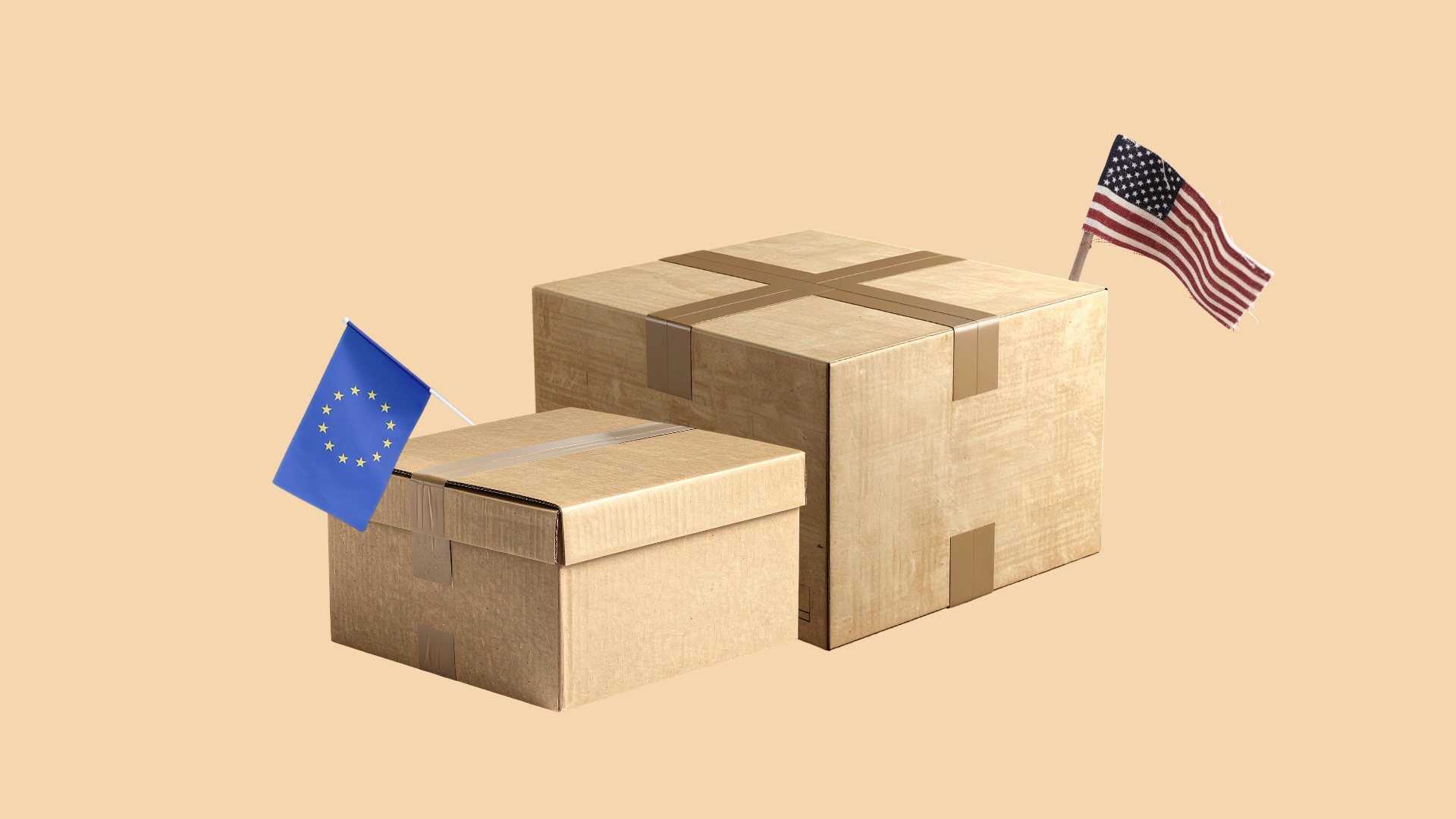
Starting July 2026, two groups of new requirements will come into effect simultaneously for sellers shipping goods abroad—in the US and the European Union. They concern the certification of certain goods, new customs duties, and declaration submissions. Understanding these changes will help prevent border delays and unexpected expenses. Let's look into what exactly is changing and how to prepare.
USA: New Import Requirements from July 8
From July 8, the US is introducing additional import requirements that complement existing duties. The changes affect goods under approximately 600 HS codes—and a significant number of sellers fall into these categories without even knowing it. This primarily concerns clothing (specifically shorts) and children's products.
For such goods, certificates of conformity are now required. There are two main types of documents:
- CPC (Children's Product Certificate) — a certificate of conformity for children's products. It is mandatory for children's goods and requires laboratory testing. The cost of such testing can range from roughly $1,000 to $10,000 depending on the product, making it a substantial expense.
- GCC (General Certificate of Conformity) — a general certificate of conformity. It applies to adult clothing and other consumer goods. This one is simpler: it does not mandate laboratory testing, although certain verifications are still required.
How to Prepare for the Changes in the US
The most important thing is to check in advance whether your product falls under the new requirements based on its HS code. SkladUSA support can provide a list of the relevant codes so you can verify your inventory.
A shipping solution already exists. The system will automatically generate special documents: if an item in a consolidation or express shipment requires certification, the necessary document is created and attached to the shipment based on a special license and registration. This is a legal mechanism that allows shipments to continue without interrupting business operations.
It is worth noting that slight delays are possible during the first one to two weeks after July 8 while the new processes settle in. This is a normal adaptation period for any new customs regulations, so allow for a small buffer of time when communicating with your buyers.
EU: New Import Rules from July 1
From July 1, the €150 de minimis allowance in the European Union will be abolished, and a mandatory duty of €3 will be introduced for each declaration line item. This applies to any shipment entering Europe regardless of the carrier: via express, courier services, or consolidation—€3 will be charged for each item listed in the declaration.
If a shipment is sent without an IOSS number, VAT plus €3 per item applies additionally. If you sell on a marketplace that collects IOSS, VAT is already paid and will not be charged again, but the €3 duty per line item will still apply.
Why a Warehouse in Poland Becomes an Advantageous Solution
The new EU rules make using a warehouse in Poland particularly attractive. The logic is simple: if you have high-volume sales in Europe and a single product (one line under a single code), you bring a batch into the warehouse in Poland and pay the €3 fee only once—upon entry. After that, the product remains in the warehouse and is distributed throughout Europe without the additional €3 per item fee.
In addition to saving on the new duty, a warehouse in Poland offers other benefits. More and more European sellers operate through this type of logistics because most postal services in Europe do not ship to the US due to customs complexities and the DDP scheme. A local warehouse in the EU simplifies both European and transatlantic shipments.
European Consolidations and Double Taxation
For orders sold under the IOSS system up to €150, shipments are handled by the service's own brokers. This avoids double taxation: without passing through a broker and being released into free circulation, the freight simply cannot enter EU territory. Among the most popular destinations for European consolidations are Germany (transit time around 5–6 days), the Netherlands, France, Austria, and Italy.
Checklist for Preparing for the New Rules
- Check the HS codes of your product range to see if your goods require certification in the US.
- For children's products, budget time and funds to obtain a CPC; for adult clothing, a GCC.
- Make sure your system generates the required documents automatically upon shipment.
- For sales in the EU, evaluate the practicality of storing goods at a warehouse in Poland to pay the duty only once.
- Check that IOSS is working correctly on your marketplaces to avoid unnecessary VAT.
- Warn buyers about potential short delays during the first weeks of July.
The new US and EU customs rules starting July 2026 are no reason to panic, but they do require preparation. In the US, some goods will require CPC or GCC certificates, and in Europe, a €3 fee per declaration line item will appear after the elimination of the €150 threshold. Sellers who check their inventory in advance, set up automatic document generation, and consider a warehouse in Poland for the European market will go through this transition with minimal losses. The current list of HS codes and assistance with registration can be obtained from SkladUSA support.
Was the article useful to you?
Blog
These articles may also
be helpful to you
Sep, 2026
How Americans Will Spend Money for the 2026 Holidays
What Sellers on Etsy, eBay, and Amazon Need to Learn from These Numbers
Jun, 2026
How to Prepare Your Etsy Shop for Scaling: Logistics, Production, and Delivery
The most successful sellers build a framework capable of supporting future business expansion well in advance

Jun, 2026
Oleh Ladan, SkladUSA: “We Help Ukrainian Businesses Sell Worldwide”
Oleh Ladan, founder of SkladUSA, was a guest on the YouTube channel Young Business.



Feb, 2026
Preparing Your Etsy Shop for Saint Patrick's Day 2026: What Has Changed and How to Se...
From Vibrant Green to Patina Blue, From Print to Embroidery: Adapting to New Trends and Ensuring On-Time Delivery

Jan, 2026
U.S. Professional Holidays: The "Quiet" Calendar That Can Boost Your Etsy Sales
In the United States, expressing gratitude to those who "stand on watch" has long been a cultural cornerstone—and on Ets...
Jan, 2026
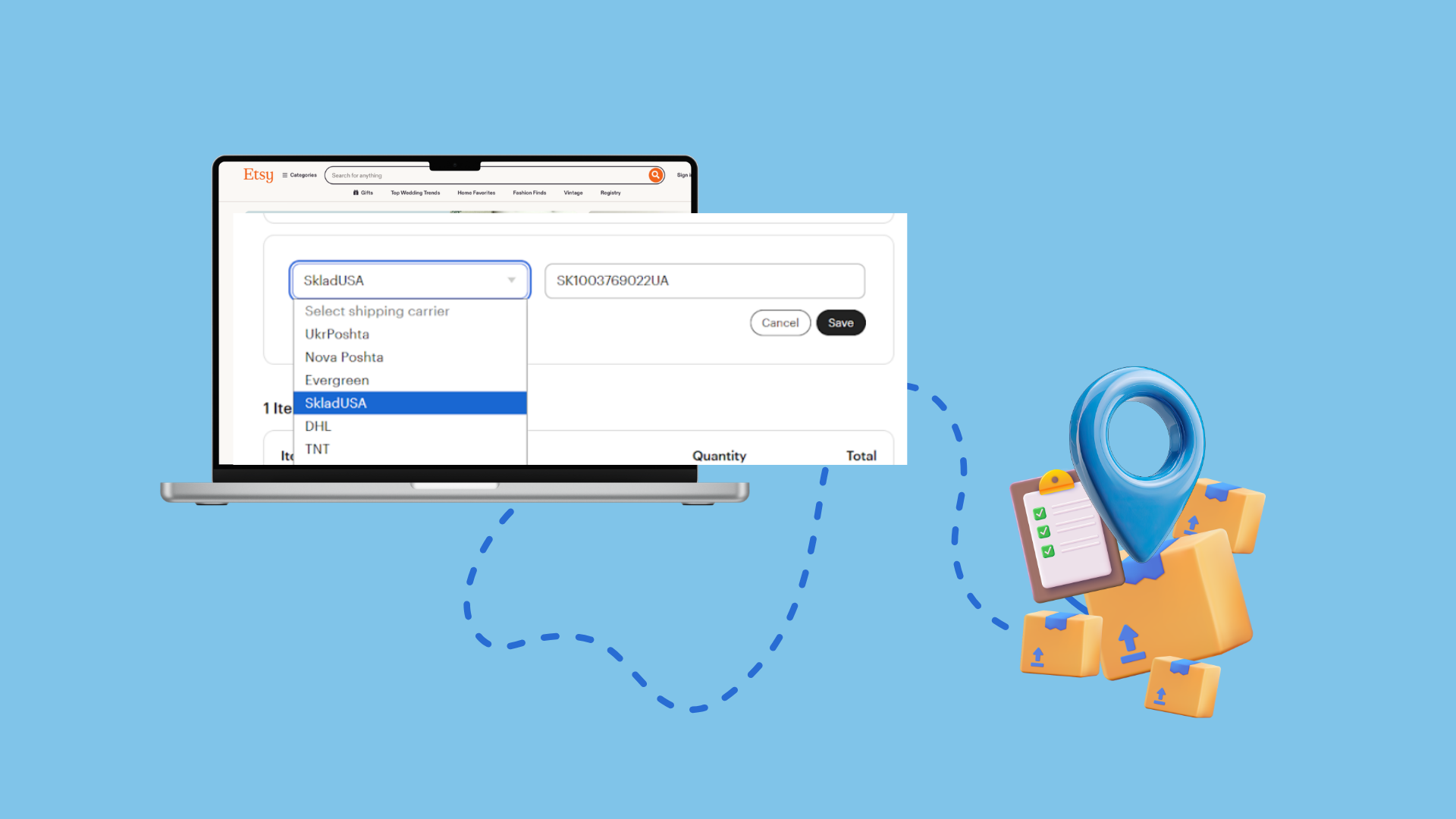
SkladUSA as an Etsy Shipment Partner: How Ukrainian Sellers Can Deliver Faster to the...
Etsy officially supports SkladUSA as a third-party shipping service for shipments from Ukraine

Jan, 2026
Why Pinterest is Vital for Etsy in 2026
Pinterest Predicts 2026 for Etsy: How to Boost Sales While Others Are Still Catching Up

Jan, 2026
How to Boost Etsy Sales for Valentine’s Day 2026: Trends, SEO, and Shipping Strategie...
In 2026, Valentine’s Day is about much more than just "couples." We break down how to capture new shopping behaviors, pr...

Sep, 2025
Mureli: From First Orders to a Premium Brand. How Partnership with SkladUSA Transform...
In this interview, Sviatoslav shares how SkladUSA’s logistics support helped the brand evolve from a small startup into...
Why is the article not useful?
Thanks for sharing your opinion. Please help us improve this material.
The article is not useful because:
Thank you!
Your opinion is very important to us.